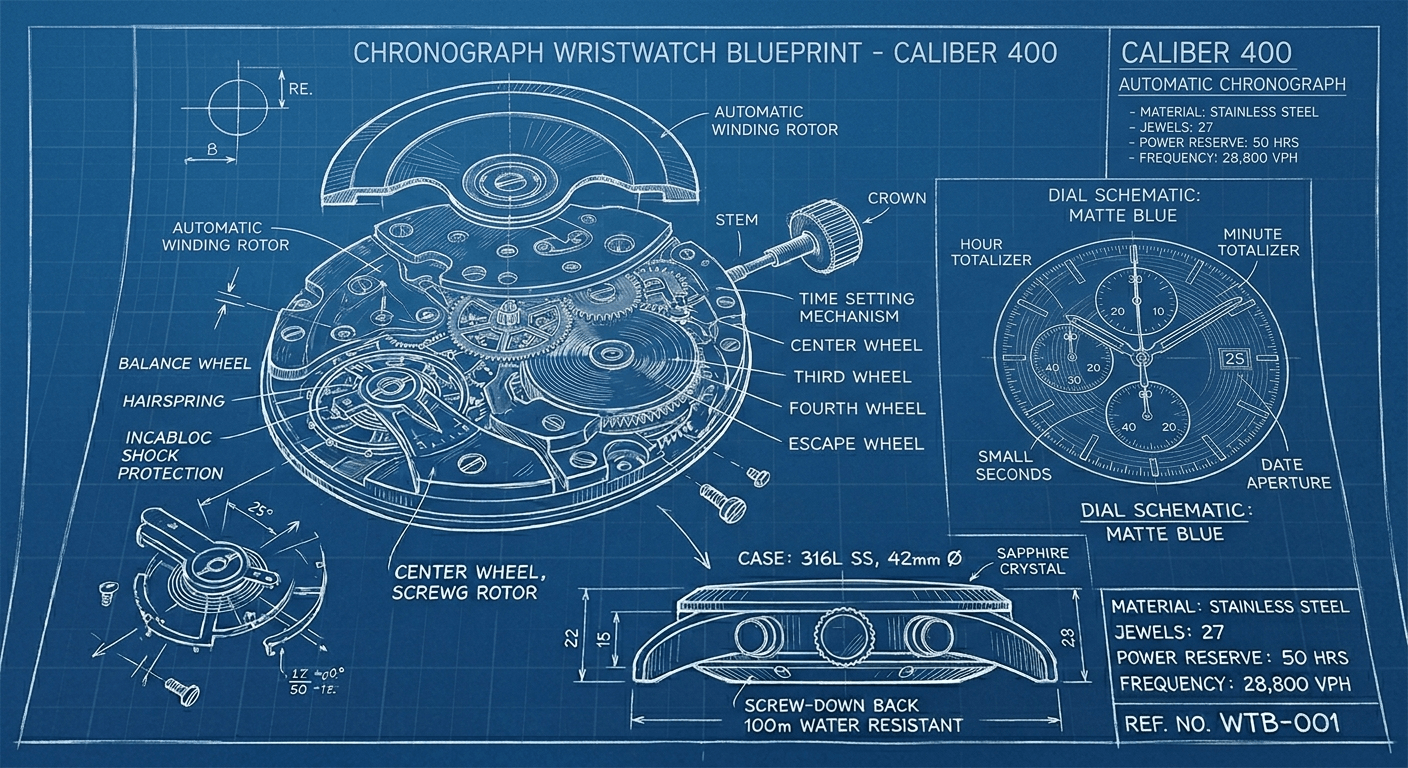
I had ideas before I had knowledge. That gap needed closing before anything else.
So I started at the beginning. Cases. Dials. Movements. Tolerances. Assembly. Not as concepts—as physical realities. The kind you only understand when you're holding the parts, asking why something doesn't fit, and realising the answer lives in a decision made three steps earlier.
A watch is a chain of dependencies. Every component answers to another. There's no hiding a bad decision—it just travels downstream.
That's what makes watchmaking both demanding and honest. You can't bluff your way through a tolerance. The movement either runs or it doesn't. The case either seals or it doesn't. Simplicity on the outside demands precision on the inside.
The watches I'd admired most always looked effortless. Learning the process taught me just how much effort that effortlessness costs.
That knowledge didn't slow things down. It made every choice more deliberate—and the work more worth doing.